
CAC -- customer acquisition cost--is a frequently oversimplified KPI that's often manipulated at best as a vanity metric.
It’s clean.
It’s simple.
It makes for great slides presented by would-be digital marketers.
But here’s the uncomfortable truth: CAC is lying to you — or at least, it can be manipulated so easily that you might be lying to yourself without even realizing it.
The way most businesses calculate and present CAC is riddled with assumptions, exclusions, and potential trickery.
This is particularly egregious if your digital marketing agency is managing and reporting on your CAC for you.
Let’s dig into the myths, manipulation, and what/how you should actually be measuring and reporting your customer acquisition cost.
At its core, CAC is simple math:
CAC = Total Marketing & Sales Spend ÷ Number of New Customers Acquired
If you spend $100,000 and get 1,000 new customers, your CAC is $100.
Simple enough, right?
But here’s the problem:
--What counts as “spend”?
--What counts as a “customer”?
--And over what time frame?
The answers to those questions are where CAC gets shady.
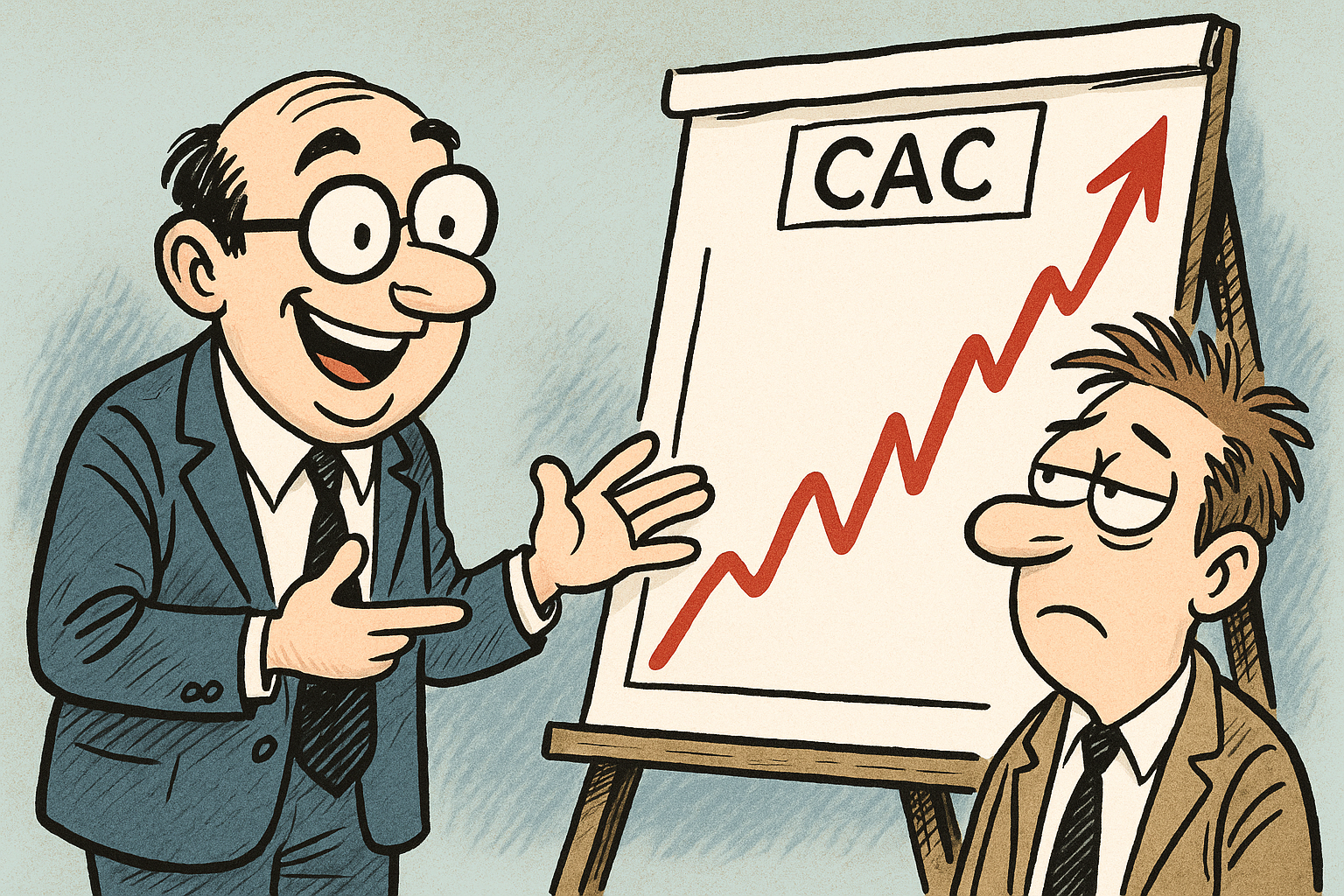
Let’s pull back the curtain on how digital marketing and finance teams fudge the numbers — intentionally or not.
Want to make CAC look better? Just exclude certain costs.
If you’re only counting direct response ad spend and ignoring everything else that helped close the deal, you're getting a sanitized number that looks nice but excludes critical costs.
Some companies count leads, trials, or even visitors as “customers” when calculating CAC.
Or worse: they only include high-LTV customers in the math, quietly excluding the ones who churn after 30 days.
It's reminiscent of shadow SaaS numbers that look good for reporting, but ultimately serve no one.
This isn’t just fuzzy math — it’s borderline fraud when used to raise capital.
By shortening the window of analysis to a particularly “hot” month or campaign, companies can make CAC look artificially low.
It’s like bragging about your weight loss after a single day of fasting — it doesn’t reflect the full picture.
Low CAC is nice, but how long does it take to earn that money back?
If it takes 18+ months to recover your spend, you're playing a dangerous game — especially if you’re dependent on investor capital to bridge the gap.
This is the SaaS death spiral: cheap CAC, long payback, no cash left.
This problem is rarely present in high-ticket, high margin services, but in MRR scenarios with inexpensive software that requires scale to breach into profit, it's no bueno.
You might’ve “acquired” that customer, but if they’re gone in 90 days, was it really worth the spend?
CAC that doesn’t consider lifetime value (LTV) or retention is worse than useless — it’s misleading.
Let’s say your Google Ads CAC is $350 and your influencer program is $50. If you blend them, you get a nice-looking $200 average.
But that doesn’t mean either channel is working. Averaging can mask severe underperformance in your primary acquisition engine.
Blended CAC — across all channels, products, and customer types — tells you nothing about what’s actually driving your growth.
It’s like taking the average temperature of everyone in the hospital and saying “Everything looks fine.”
Behind the math lies a set of assumptions that rarely hold up in the real world:
When these assumptions go unchallenged, CAC becomes more of a feel-good fantasy than a guiding metric.
One of the biggest mistakes marketers make is treating CAC like a monolith — a single, catch-all number that somehow represents the efficiency of all campaigns across all channels.
That’s a dangerous oversimplification.
Every campaign type — whether it's SEO, PPC, paid social, outbound, or affiliate — has wildly different cost structures, timelines, and attribution challenges.
When you blend these channels together into one CAC metric, you end up with a number that means nothing and hides everything.
SEO is front-loaded with costs and delayed in returns.
If you treat SEO with the same attribution window as paid search, your CAC will appear artificially high — especially early on.
But over time, it may prove to be your most cost-effective channel.
PPC, on the other hand, gives you data and results right now — but at a price.
PPC CAC can look attractive early, but becomes harder to maintain as scale increases and competition drives up SEM bidding costs.
Without proper segmentation, this rising CAC gets washed out in your blended average.
If you’re not segmenting CAC by campaign type, here’s what happens:
Segmenting CAC helps you:
Treat CAC like you would treat customer personas: with segmentation.
Otherwise, you’re managing your growth with a single blurred number that tells you nothing — and costs you everything.
So if CAC (customer acquisition cost) isn’t the holy grail, what should you be looking at?
Start with these:
These are the questions that uncover the truth behind the marketing spend — and protect your business from false signals.
When CAC is manipulated, misunderstood, or misused, the consequences are more than cosmetic:
We’ve seen companies with CAC under $100 implode, and others with $500+ CAC thrive — because CAC alone doesn’t tell the whole story.
At Marketer.co, we don’t fall for CAC fairy tales — and neither should you.
We help brands:
Because it’s not about how many customers you acquire — it’s about how well you understand the cost and value of each one.
CAC isn’t evil.
But like any KPI, it’s only as honest as the way it’s calculated.
When misused, it can lead entire companies off a cliff.
So the next time someone brags about their CAC, ask:
“What’s included in that number?”
Odds are, the truth is more complicated than your basic spreadsheet or monthly marketing report suggests.
Want help uncovering what your real CAC looks like?
Let’s talk. Book a free strategy audit with the team at Marketer.co.

Social media once promised free brand exposure, authentic engagement, and access to an endless supply of leads if you could figure out how to rope them in. That dream has been crushed by changing algorithms and platform monetization. While brands used to rely on social media for growth, it’s no longer a viable strategy. Companies that have been relying on social media need to rethink how they generate leads.
When brands first started using social media as a marketing channel, it looked like the perfect strategy to generate leads without spending a dime on ads. Brands poured resources into their daily posts and audience growth campaigns. But the promise of organic visibility didn’t last. Once platforms had businesses hooked, they pulled the plug by limiting organic reach and forcing them to pay for advertising if they wanted to get their message in front of their market.
· The illusion of free reach
For a time, businesses were convinced that posting regularly on social media would get them visibility. In 2012, posts made by Facebook pages were reaching an average of 16% of fans and that made this strategy seem worthwhile. Today, those posts reach less than 2% of fans. Those are sad numbers. If you have 10,000 followers, less than 200 will see your content. This isn’t a mistake. It was an engineered algorithmic change.
· Pay to play
Once these social media platforms saw that companies had built up massive followings, they saw the opportunity to make money and positioned paid promotion as the only reliable way to reach their audiences. That’s when “Boost Post” buttons started to appear. At that point it wasn’t possible to optimize posts for the algorithm. Brands had to pivot to paid ads or sink.
· Content oversaturation
As time went on, the volume of content posted to social media platforms daily made it impossible for every update to be seen. Facebook alone hosts over 100 billion messages send daily (and that’s not counting photos and videos). With millions of posts competing for attention, platforms had to program their algorithms to filter content. That wouldn’t be bad if it weren’t for the fact that the filters are programmed to prioritize paid content and updates from large accounts that spend a lot of money on ads. For small and medium sized brands, the odds of getting seen organically are slim to none.
While Facebook used to be somewhat of the digital town square for the world, it’s now become the clearest example of how organic social reach is nearly dead. Brands have spent years building their pages, fan base, groups, and connection, but the platform has become an ad-first ecosystem. Facebook has become a marketplace where engagement must be purchased.
In the early 2010s, Facebook pages were a powerful, free marketing tool. Today, the average organic reach for a post is barely 2.2% of total page followers. That audience size is too small to make much of a difference. And for small businesses, that number is even lower.
Many business owners have started to notice that Facebook posts with external links underperform by 50%. Facebook wants to keep people on the platform, and the content that gets the most reach includes native video reels and marketplace listings. Businesses looking to build their email list by driving traffic to their landing pages are forced to pay for ads to be seen.
Even after Facebook began limiting organic reach, groups were the secret weapon. As visibility tanked, business owners began creating groups to get better visibility. But then group posts began to disappear into the void of algorithmic filtering and no longer provide an advantage.
Facebook went from a thriving digital community space to a throttled paywall where brands need to pay to speak to the audience they’ve already earned.
Instagram used to be a great platform for businesses to connect with prospects through visually creative content. It gave brands a genuine chance at building loyal audiences without buying ads. But in the last five years or so, Instagram hasn’t just followed Facebook’s lead – they’ve taken things even further.
· Keyword searched have been nearly eliminated
Instagram used to have an amazing search tool where you could look for posts using keywords just like you would on any platform. This made it possible for small businesses to be discovered by their market through user queries. But somewhere along the way, Instagram decided that wasn’t safe, and they put a stop to providing search results.
Before the change, accounts and posts would show up when users typed phrases and words into the search bar. Today, searches only turn up a handful of accounts that happen to be large influencers and verified brands. It is now officially impossible for Instagram content to be discovered organically. The only way brands can get visibility on Instagram is through paid ads.
· Reels perform while posts are suppressed
Instagram launched Reels to compete against TikTok on short video content and started prioritizing Reels over posts in feeds. Traditional posts like photos, carousels, and Stories have been deprioritized. Unless a business invests in a consistent short-form video production campaign, their organic reach will be nearly zero. But even when brands play the Reels game, the algorithm favors already-popular accounts. It’s extremely difficult for smaller players to reach anyone organically even with Reels.
· Engagement rates have declined
Instagram engagement is collapsing. In 2023, a RivalIQ benchmark report noted Instagram engagement declined by 30%, and it’s been dropping ever since. Bad content isn’t the culprit here – it’s the platform’s algorithm pushing brands into paid promotion.
If you think Facebook and Instagram have become wastelands, Twitter/X is even worse. X used to be a platform where brands and people could connect, have conversations, and share posts on important topics. With engaging copy it was easy to earn plenty of attention, but those days are over.
· External links suppress organic reach
Think you can drive traffic to your website or blog on X? Think again. Like Facebook, X suppresses organic reach for posts with external links and it’s no longer a useful marketing asset. Posts with outbound links see 30-50% less engagement than posts with text or images alone.
· Reach now requires that blue checkmark
X has become somewhat of a racket over the years. In addition to posts being invisible when they contain external links, brands need to buy that blue checkmark in order for their posts to reach their own followers. It’s no wonder so many brands and individuals have ditched the platform entirely.
· The algorithm isn’t logical
Since the “For You” tab became the default feed, it has stifled discoverability. Users no longer see a chronological timeline of posts from accounts they follow. Instead, that content is filtered through the algorithm and a lot of content never gets seen at all. The only option to gain visibility is to – you guessed it – pay for X ads.
The decline of X clearly demonstrates that platforms aren’t designed to facilitate communication and connection. They’re gatekeepers that selectively hide or boost content based on who pays the most.
LinkedIn once promised professionals a space to connect, share insights, and build credibility. And like other social media platforms, LinkedIn had a good run in the early days. When all other social media platforms descended into chaos, LinkedIn positioned itself as the professional alternative. It was the go-to source for expertise, company news, and industry insights. The content reached professionals and decision makers and could be used for cold outreach and even talent acquisition. Today, that’s not the case.
LinkedIn has morphed into a space cluttered with “thought leadership” clichés and growth hack style posts designed for the algorithm over humans. Organic reach on LinkedIn is reserved for those who can game the system.
· Content quality has fallen dramatically
The shift in quality on LinkedIn is harsh, and people have noticed. One study found that 54% of all long-form content on LinkedIn was written by generative AI. Even the comments are AI-generated and devoid of genuine value. LinkedIn has officially become a wasteland of low-quality posts designed to farm likes. It’s becoming harder for brands to stand out with substance because low-quality posts dominate the algorithm.
· LinkedIn now prioritizes “viral” style content
LinkedIn has jumped on the short-form content train and now favors posts that provide short lines of text broken into one-liners with emotionally-charged storytelling. These posts do get engagement, but they don’t communicate depth or expertise – the type of content LinkedIn is supposed to support. While this content gets promoted, in-depth industry insights and educational content gets buried.
· LinkedIn has a paywall, too
If brands want visibility on LinkedIn, they need to pay for ads. Just like other platforms, LinkedIn ads consistently outperform organic posts even when the content is identical.
It’s unfortunate that LinkedIn has evolved from a respected, professional networking platform into a wasteland full of spammy newsfeeds. While some people still find this space valuable for recruiting and brand awareness, it’s only a matter of time before even that disappears.
The collapse of organic reach across social media platforms is the new business model. In order to monetize, platforms had to prevent brands from talking to their audiences for free. By systematically reducing organic reach, they created an environment where paid advertising isn’t optional. It was a slow squeeze that got tighter and tighter until it became a non-negotiable dependency.
Just how much money are these platforms making off brands? A lot. In 2023, Meta’s ad revenue hit $131.95 billion. In 2024 they generated more than $160 billion in ad revenue. With numbers like that it’s no wonder organic reach is limited.
Algorithms play a big role in supporting the ad-first culture on social media. Algorithms aren’t neutral and they don’t give you objectively relevant content. They’re designed to manipulate visibility. Brands always talk about “beating the algorithm,” but the truth is that algorithms are engineered to ensure you can’t beat it consistently without paying. That’s why these platforms have “Boost Post” buttons. They intentionally throttle reach and then offer you a way to pay to be seen.
This shift to the pay-to-play model has fundamentally changed the way businesses use social media. They can no longer ask, “How can we grow our audience organically?” Today, the only question that matters is, “What’s my cost per click?” Paid campaigns offer measurable ROI, so it’s not a bad thing. But there are huge benefits to organic reach, too. Unfortunately, brands no longer have options.
Even when brands manage to get some results out of organic reach, it’s no longer scalable. A decade ago it worked to post consistently, engage with followers, and get those viral lifts once in a while. But this method no longer delivers meaningful business outcomes. Algorithms, audience behavior, and platform economics have shifted, and organic content no longer has the power it once did. For businesses committed to growth, social media content is no longer a reliable strategy.
· Follower count doesn’t equal reach
In the beginning the formula was: grow your followers and your reach will grow at the same time. But that math no longer works. A brand with 100,000 followers may only reach 1,000 of them. That means follower count is just a vanity metric and can’t be used to measure influence.
· Content fatigue
Users are drowning in content, and while they do tend to scroll for hours it doesn’t mean they’re stopping and reading anything. Feeds are literally drowning in videos, ads, memes, and updates. Even when a brand’s post makes it to a user’s feed, attention is scarce. Entertainment is prioritized over substance, and that’s an uphill battle for many businesses.
· Organic performance has noticeably plateaued
Marketers have known for years that organic reach is stalling. They’ve been reporting a decline in organic performance for years. Even creative, consistent posting no longer guarantees growth.
One of the illusions businesses are sold is the concept of virality. They believe that if they just post the right meme, a clever update, or the perfect reel, their content will go viral without having to pay for ads. But virality is a mirage, not a marketing strategy. While posts occasionally do go viral, the odds are not in anyone’s favor and it’s not predictable. Even so, the meaningful impact of viral posts is minimal.
· The algorithm decides what goes viral
Many people think virality is random, but it’s actually engineered. Platforms determine what content to show people, and the winners are usually form large accounts with a lot of engagement. For example, on TikTok, most viral videos come from accounts with a high follower count.
Once a platform’s algorithm sees content going viral, that’s the content it will continue to push to everyone. Content won’t go viral unless the algorithm decides it’s worthy.
· Viral content doesn’t produce meaningful results
Even when a brand manages to get their content to go viral, the results are fleeting. One viral post might get thousands of likes, but that doesn’t mean thousands of sales. Follower retention and sales after a viral spike are low. Most users engage once and never return.
Where brands should invest instead
The death of organic social reach means digital marketing strategies need to evolve. Chasing reach on platforms that actively suppress it is a losing battle. Instead, smart brands are shifting to channels they can control, where effort compounds over time and visibility isn’t tied to the highest bidder. Organic search might still have value, but the real growth is happening elsewhere.
· Search engine optimization (SEO)
Although it’s a long-term game, SEO provides real rewards. The right content can bring in targeted organic traffic for years. Unlike a Facebook reel that disappears after 24 hours, a high-ranking article on Google can provide consistent traffic that converts.
· Email marketing
Email marketing has always been one of the most profitable digital marketing strategies. You own your list and it’s immune to algorithm changes.
· Intentional paid ads
Paid ads aren’t the enemy; they just need to be crafted with intention to work. Instead of blasting platforms with generic ads, today’s targeting options allow brands to reach hyper specific audiences based on location, demographics, and interests. Effective ads don’t just buy reach. They buy predictable revenue. With a clear cost-per-lead (CPL) and return-on-ad-spend (ROAS) metrics, businesses can scale with confidence.
Don’t wait for the algorithm to bless your content. At Marketer.co, we help businesses escape the trap of declining organic reach and build digital marketing strategies that actually convert. From precision-targeted paid ads to SEO that drives organic traffic over time, we turn clicks into long-term revenue.
Don’t let the death of organic social bury your business. Contact us today and let’s build a growth engine that thrives no matter what social media platforms decide to change.

Let's set the murder scene.
Content marketing had a good run.
It climbed from scrappy blog posts to multi-channel dominance, propped up by armies of freelancers and SEO strategists.
Then AI showed up like a Hitchcock villain with a smile and a knife.
Suddenly, the rules changed.
Content didn’t just get disrupted—it got dumped in the river wearing cement shoes.
Here’s the body count.

Remember when $100 blog posts were considered bargain-bin content?
Those were the glory days.
Now AI will crank out 1,000 words in less time than it takes you to make a bad cup of office coffee.
The result?
Entry-level and mid-tier freelance writers are being pushed out of the market faster than you can say “per-word rate.”
It's only one of the reasons we continue to see former inexpensive writers reaching out through our various sites peddling their content writing services.
Unfortunately, the glory days of remote-writer positions is dead.
On the technical side, large language models (ChatGPT, Claude, Gemini, LLaMA, take your pick) can spit out entire content calendars overnight.
For businesses, that means cheap, instant, infinitely scalable copy.
For human writers, it means the floor just dropped out.
Only market research specialists, storytellers, or industry insiders with unique insights are surviving this purge.
The content mills that used to churn out 500-word keyword soup just met a chef that never sleeps.
And guess what? AI is infinitely faster, cheaper (errr...free), and just as bland.
AI can mass-produce “10 Best CRM Tools” or “Top 7 Ways to Lose Weight with Intermittent Fasting” at industrial scale.
The affiliate sites (a.k.a. content farms) that once thrived on churning out formulaic fluff now face stiff competition from a machine that doesn’t demand benefits or bathroom breaks.
Add insult to injury: Google’s Helpful Content Updates and AI-detection algorithms are sniffing out generic sludge faster than ever.
The strategy of “more is more” died with AI’s arrival.
Now it’s about authority, originality, and actual experience.
AI didn’t just kill your content strategy—it stole your keyword list and set it on fire.
Long-tail keywords used to be a clever way for scrappy businesses to outrank the giants.
But AI models are trained on long-tail queries.
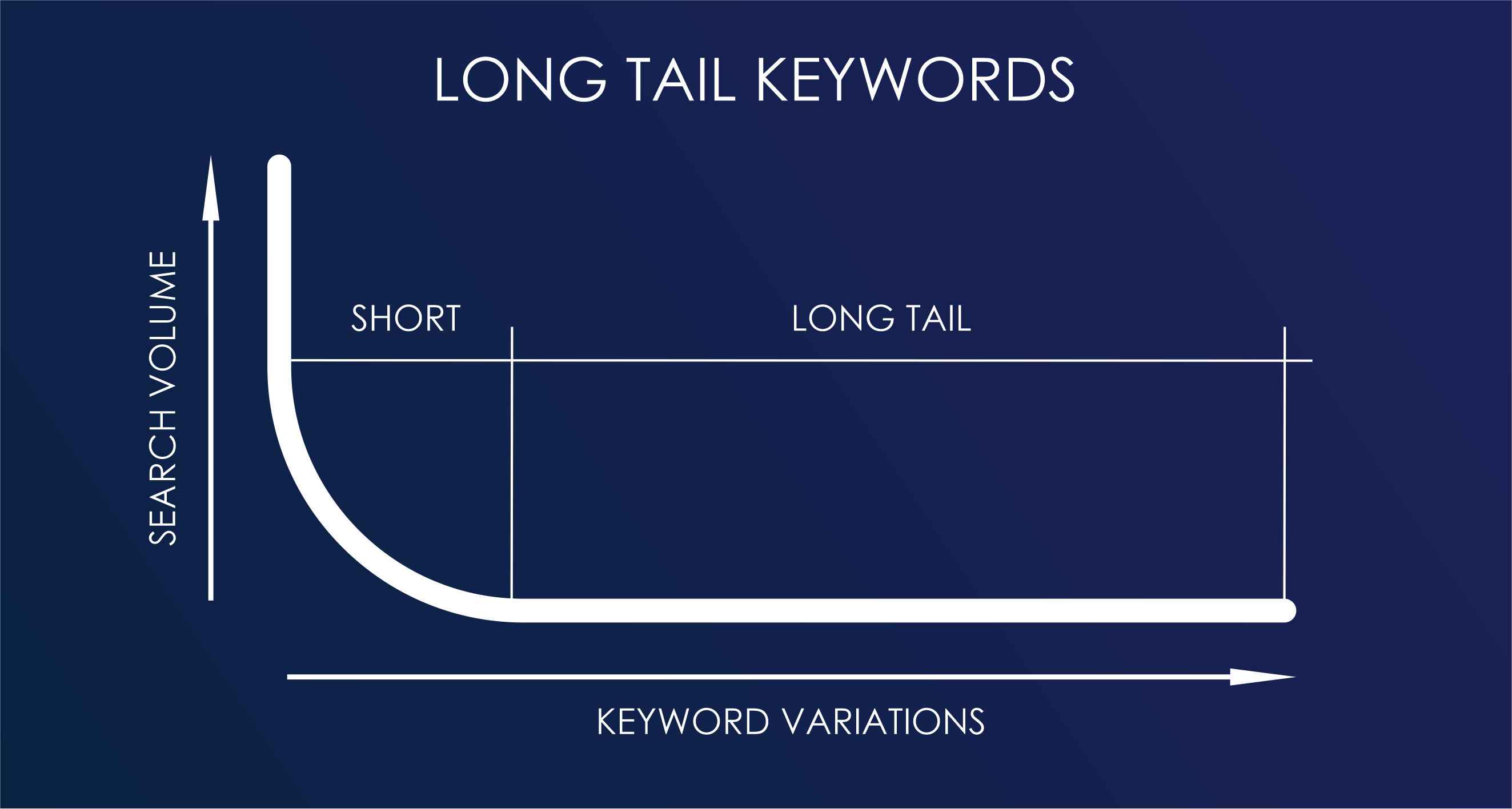
They know the obscure, weird, conversational phrases people search and how to answer them in an expanded way.
And instead of sending traffic to your carefully optimized blog post, AI often just answers the query directly.
Zero-click search is the new sheriff in town.
That means you can’t rely on ranking for “best ergonomic mouse under $30 in 2025.” AI already has an answer—and it’s not citing you.
When everyone uses the same AI, everyone sounds… exactly the same.
How many times have you read a blog post that starts with, “In today’s fast-paced digital world…”? That’s AI homogenization in action. It flattens tone, style, and originality into one beige voice.
For brands, that’s a death sentence.
Voice and differentiation used to be competitive advantages.
Now they’re diluted unless someone with a pulse (and an opinion) steps in to edit.
Real differentiation today comes from proprietary insights, creative storytelling, or just having the guts to be bold.
Why pay for steak when you can get free spam?
The explosion of free, AI-generated content has gutted the perceived value of content itself.
White papers, blog posts, and even eBooks feel cheaper because the supply has ballooned to infinity.
When everyone can produce an instant article, no one wants to pay for one.
The economics are brutal: supply floods, demand sags, prices collapse.
What is the only content with real market value now?
Things AI can’t easily fake—original research, expert interviews, proprietary data, or high-production multimedia.
Everything else is in a proverbial race to the bottom.
Okay, so the crime scene looks bad.
But not all content is toe-tagged.
Some is still alive and kicking—if you know where to look.
Content isn’t dead. But if you’re publishing beige AI sludge, it’s already in the morgue.
Let’s tally it up:
AI didn’t just disrupt content—it left the chalk outline for everyone to see.
The survivors?
They’re the ones who stopped treating AI like a ghostwriter and started treating it like an amplifier.
Because in the end, AI didn’t kill all content.
It just killed the lazy stuff.
Ready to scale your digital marketing with AI?
Get in touch with us today to start the conversation.

There are two types of people in the world:
Marketers, who get a dopamine rush from hitting “refresh” on an Instagram insights dashboard, and
CFOs, who break into hives when they hear the word “impressions.”
The marketer wants to build brand awareness and boost engagement.
The CFO wants to reduce CAC and increase margin.
And while both technically work for the same company, their version of "success" might as well come from parallel universes.
Marketer: “We got 100,000 video views!”
CFO: “...and we got 12 sales?”
Let’s face it: marketers are often hired to make noise.
CFOs are paid to cut it out.
Vanity metrics are the glitter of marketing—shiny, attention-grabbing, and utterly useless in the long run. They include:
These marketing metrics are easy to get and even easier to manipulate. And that’s why marketers love them.
They pad decks.
They look great in graphs.
They get you SEO bragging rights.
They make you feel productive without the hassle of delivering actual business value.

Snark alert: Vanity metrics are the adult version of gold stars. Congrats! Now go sit back down.
CFOs don’t want your glitter. They want your numbers to tell a story that ends in profit. That’s why they focus on things like:
To a CFO, a marketing report full of “engagement spikes” is about as comforting as a PowerPoint presentation from Fyre Festival’s head of ops.
Here’s where things go off the rails:
Reminder: If vanity metrics were KPIs, every influencer with 200K TikTok followers would be a CMO. (Spoiler: they’re not.)
Marketing is persuasion, and part of persuasion is showmanship. That means marketers will do whatever it takes to inflate the optics. It’s not necessarily malicious—it’s instinct. When a campaign doesn’t convert, you lean into what did look good.
"We didn’t generate revenue, but look at that click-through rate!"
Here’s why it keeps happening:

The puffer-fish strategy is simple: make your numbers look big, scary, and important—even if they're mostly air.
Yes, marketers and CFOs speak different languages. But that doesn’t mean they’re doomed to hate each other forever.
A few ways to bridge the gap:
Compromise mantra: You can’t hug your Instagram followers, but you can pixel them and track their behavior until they convert.
Here are a few metrics that offer the dopamine fix and the fiscal rigor:
No more guessing games.
If both teams can agree on a few grounded KPIs, the CMO won’t dread quarterly reports, and the CFO won’t start twitching when someone says “engagement.”
Vanity metrics aren’t evil.
They’re just... decoration. Like the parsley on a steak—nice to have, but not why you ordered dinner.
Marketers must evolve past the thrill of cheap metrics and focus on meaningful outcomes. That doesn’t mean abandoning creativity. It means channeling it toward business growth.
And for CFOs? Maybe chill a bit when the marketer gets excited about a viral post. Just ask for a follow-up showing what it did to revenue.
Because in the end, marketing isn't just about visibility. It's about viability.
Final Word:
Vanity is for mirrors. Marketing is for margins.
If your metrics aren’t helping the business grow, they’re not metrics—they’re makeup.

How Marketers Keep Pouring Money Into a System Where the House Always Wins
Let’s get one thing out of the way: paid ads work.
Sort of.
Until they don’t.
What started as a straightforward way to buy attention has slowly evolved into something that looks suspiciously like a Ponzi scheme.
Not in the criminal sense — but in the systemic sense: unsustainable returns, over-reliance on new capital (i.e. ad budgets), and a growing pile of players who profit off the addiction rather than the outcomes.
We need to talk about the Paid Ads Ponzi Scheme — how we got here, who’s getting rich, and how you can get out before your business becomes the next bag-holder.
The mechanics are simple:
Let’s not pretend everyone loses. Plenty of people are doing just fine:
Perhaps the most diabolical part of the Ponzi scheme is attribution.
Marketers cling to dashboards showing beautiful ROAS numbers. But attribution is increasingly broken:
The Paid Ads Ponzi works until it doesn’t. The breakdown usually happens here:
Why do brands stay on this treadmill? A few reasons:
Paid media isn’t inherently evil. But it cannot be your only channel. If you're ready to escape, here's your game plan:
Let’s be clear: paid media has its place. It’s a powerful accelerant. But accelerants aren’t foundations.
You should treat paid ads like a faucet — something you can turn on and off, not something that controls your entire water supply.
If your business dies when the ads turn off, you don’t have a business — you have a leveraged position.
The ad platforms will keep tweaking algorithms. Agencies will keep proposing "new creative tests." Your CAC will keep rising. And unless you build something outside of the ad platforms’ walled gardens, you’re just the next mark in the Paid Ads Ponzi Scheme.
Build real marketing assets.
Diversify your acquisition portfolio.
And above all: stop thinking of paid media as growth — it's rented revenue.

When it comes to growing your business, lead generation is the backbone of success. But how do you know if your lead generation efforts are actually working? You can’t just guess – you need hard data to measure what’s effective and what needs improvement.
That’s where key performance metrics come in. By tracking the right numbers, you can determine if you’re attracting quality leads, converting them effectively, and maximizing your return on investment (ROI). Here are 10 essential digital marketing metrics you should be analyzing to assess your lead generation performance.
The first and most basic metric is lead volume – how many new leads you’re generating over a specific period. Whether you measure this daily, weekly, or monthly, you need to track how many potential customers are entering your pipeline.
If your lead volume is too low, it might mean your marketing strategies aren’t reaching the right audience or that your ad spend is too low. On the other hand, a high lead volume doesn’t automatically mean success – you also need to evaluate lead quality.
A high number of low-quality leads can be just as problematic as too few leads, so don’t focus on quantity alone.
Bringing in leads is great, but how many actually convert into paying customers? Your lead conversion rate is the percentage of leads that complete the desired action – whether that’s signing up for a free trial, making a purchase, or booking a consultation.
To calculate it:
Lead Conversion Rate (%) = (Number of Conversions / Total Leads) × 100
A low conversion rate might indicate:
If your conversion rate is low, you might need to optimize your follow-up strategy, refine your sales pitch, or make your offer more compelling.
Every lead you generate comes at a cost – whether through ads, content marketing, SEO efforts, or sales outreach. Cost per lead (CPL) helps you understand how much you’re spending to acquire each lead.
To calculate it:
CPL = Total Marketing Spend / Total Leads Generated
If your CPL is too high, it means your marketing campaigns aren’t efficient, and you’re spending more than you should for each new lead. Finding ways to lower CPL – such as improving ad targeting, optimizing landing pages, or investing in organic traffic – can improve your profitability.
Not all leads are created equal. Some are ready to buy, while others are just browsing. That’s why you need to track lead quality.
A lead quality score is usually based on specific behaviors, such as:
Your sales and marketing teams should work together to create a scoring system that helps prioritize leads based on their likelihood to convert.
Customer Acquisition Cost (CAC) goes beyond CPL by looking at how much it costs to acquire an actual customer, not just a lead.
To calculate it:
CAC = Total Sales & Marketing Expenses / Total New Customers Acquired
If your CAC is too high, you might be spending too much on ads, sales outreach, or inefficient campaigns. A high CAC can eat into your profit margins, so it’s crucial to keep this number under control.
One way to reduce CAC is by improving lead nurturing – so that more leads convert without requiring additional ad spend.
The faster you respond to a lead, the higher the chance of conversion. Studies show that leads contacted within five minutes are significantly more likely to convert than those contacted an hour later.
If you’re taking too long to reach out, you’re losing potential customers to competitors who respond faster. To improve response time, consider using automated email sequences that dynamically send to prospects based on the time they’re most likely to open the email.
Another thing you can do is set up instant notifications for new leads. This pings everyone on the team the moment a new warm lead enters the funnel. You can then train your sales team to prioritize fast follow ups.
A shorter response time keeps leads engaged and increases the likelihood of conversion. The only question is whether or not you’re making this a priority.
If you use email marketing to nurture leads, tracking open rates and click-through rates (CTR) is crucial. But before we go on much further, let’s make sure we’re clear on what we’re talking about:
To improve these rates, you can do several things:
Better email engagement leads to higher conversions. Pretty obvious, right? Well, it’s amazing how often we get so focused on technical details that we forget all about engagement. At the end of the day, this is really all that matters. Increase engagement and more conversions will follow.
At the end of the day, you want to know if your lead generation efforts are actually profitable. ROI measures how much revenue your campaigns generate compared to what you spend.
To calculate it:

ROI (%) = [(Revenue from Leads - Marketing Costs) / Marketing Costs] × 100
If your ROI is low, it might mean:
Optimizing ROI ensures you’re spending money wisely and getting the best possible return from your marketing budget.
Generating leads is only the beginning – you also need to track how valuable those leads are over time.
A high lead retention rate means that your leads are sticking around, engaging with your brand, and eventually converting. On the other hand, if most of your leads disengage after their first interaction, your lead nurturing strategy needs improvement.
You should also track customer lifetime value (LTV), which measures how much revenue a customer brings over their entire relationship with your business.
If your LTV is high, you can afford a higher CAC, but if it’s low, you may need to lower acquisition costs or improve retention strategies.
If you’re using social media as part of your lead generation strategy, you need to track how well it’s working. Look at:
If your social media posts and ads aren’t generating leads, you might need to:
Social media is a powerful tool, but only if you’re using it effectively to capture and nurture leads. Make sure you aren’t blindly throwing darts. Have a plan, know how to measure it, and gradually shift and pivot as the results dictate.
At Marketer.co, we don’t do fluff and platitudes. We believe the only way to judge a marketing strategy is by studying the data and letting the numbers tell the story. If you’d like to build a better marketing strategy – one that’s based on ROI – we’re here to help. Contact us today to learn why startups to Fortune 500 brands alike testify our campaign outcomes are second to none!


Lead generation is the cornerstone of successful marketing, and social media is a goldmine for capturing high-quality leads. For years, businesses have leveraged platforms like Facebook, Instagram, TikTok, LinkedIn, and Pinterest to build their email lists and grow their customer bases, and you can, too
The good news is you don’t need to be a major corporation with a massive marketing budget to get results. And since each platform has unique advantages and access to a variety of audiences, social media is ideal for generating leads in any industry. Whether your goal is to reach consumers or other businesses, try these platform-specific strategies to generate leads and grow your business faster than ever before.

Before exploring platform-specific strategies, it’s important to understand the overarching methods of generating leads through social media.
1. Understand and define your audience
Like every other marketing strategy, successful lead gen begins with identifying your market and crafting your messages and content to resonate with their desires and needs. On social media, attention is limited, so you need to capture attention quickly, and that requires knowing your audience.
2. Create valuable and engaging content
Since people scrolling through social media feeds tend to be multi-tasking and have limited attention, it’s crucial to craft content that captures attention immediately.
3. Optimize your profiles
Users will check your profile to see who you are and get a better sense of your legitimacy. Optimize your social media profiles with your business name, website, and any other important information.
4. Use paid advertising
Paid advertising is a huge component of social media lead generation and provides a significant advantage over just posting content.
5. Leverage user-generated content
When people create their own content featuring your products or services, you’ll naturally start to earn trust and that will positively influence purchase decisions. You can get people to create content by running contests or by creating an irresistible brand people love.
6. Don’t forget about sales
When you think of generating leads, don’t forget to include sales as part of your strategy. For example, some businesses sell a simple PDF guide for $15-$47 that delivers immense value just to capture relevant leads they can nurture and upsell later. The revenue from sales is nice, but the main point is to capture hot leads.
Selling a PDF guide works similarly to giving way a free lead magnet, and you might be surprised to see how well it works. Some people are more likely to give you their email address in exchange for a free download, but paying customers are more likely to buy upsells and make additional purchases.
7. Engage with your audience
Last, but not least, no matter what social media platform you use, it’s helpful to engage with your audience by responding to posts, shoutouts, questions, and even complaints. Interacting with people shows your customers and leads exactly who you are and why they should do business with you.
With that said, let’s take a deeper dive into generating leads on specific social media platforms.
Facebook has more than 3.06 billion monthly active users and is one of the most widely used platforms for lead generation. No matter your industry, there’s a good chance your target market hangs out on Facebook. Here’s how to reach them.
1. Leverage Facebook ads
Facebook offers several ad formats that support different end goals. For example, lead gen ads are specifically designed to generate leads, while standard ads are used for generating website traffic. While you can use standard ads to send people to a lead capture form on your website, there’s a difference.
Unlike traditional ads that send users to your website, lead gen ads keep the user on Facebook’s platform while they fill out a form in exchange for a lead magnet. Lead gen ads have been shown to get an average click-through rate (CTR) of 2.5% across all industries.
Don’t want to spend thousands on your first experimental ad campaign? You don’t need to. Facebook sets a different minimum daily budget based on how your account gets billed, but it can be as low as $1 per day. With a low cost of entry, you can start experimenting with any budget.
2. Use your website analytics data to choose keywords
Getting your ads in front of the right people begins with using the right keywords. While brainstorming can be a good place to start, using the keywords in your website analytics reports will be even better. These are the actual phrases people typed into search engines to find your site.
While looking through your reports, identify the keywords that make sense to use with your ads and test them out in a campaign. You can also use tools like Google’s Keyword Planner, Semrush, Ahrefs, and other SEO keyword research tools to find additional keywords and phrases.
3. Implement retargeting campaigns
Ad retargeting, also called remarketing, can increase conversions by 43% across all devices. This strategy allows you to show specific ads to people who have already interacted with your ads, viewed your ads, or visited your website. People who have already been exposed to your brand are more likely to engage, especially when you tailor your ads to feel more familiar. A user might see your ads three times before deciding to sign up for your free report.
4. Participate in relevant Facebook groups
Participating in Facebook groups or even creating your own group can significantly increase the number of leads you generate. It takes time to grow a group and cultivate a trustworthy vibe, so you’ll need to invest time and effort to get it going. Connecting with your audience fosters trust, and when done right, will position your brand as an industry leader or expert.
As a visual-centric platform, Instagram offers unique opportunities to capture leads. Here’s how.
1. Use Instagram stories
Instagram Stories will promote your content outside of your feed and can include “swipe up” calls to action. It’s not as good as paid ads, but it can help. Whenever you post stories, be sure to link to a landing page with a lead capture form.
2. Boost your posts
Boosting your Instagram posts can get you a better reach, but you don’t have control over your target audience. Still, it’s a decent way to get followers who may eventually see your ads and sign up for your email list.
3. Run Instagram ads
Since the algorithm makes organic social reach difficult, paid ads are by far the best way to generate leads on Instagram. You can do this in three ways: instant forms, chats, and calls. When you use instant forms, leads will fill out your lead capture form without ever leaving Instagram.
If you sell services, the chat ads can help you acquire leads through direct communication. When an ad is clicked, it opens up a DM and you can connect with your prospects through messages. The call feature works by allowing users to call you by clicking your ad.
4. Collaborate with influencers
Building up an Instagram account from scratch is not an easy task. It’s tough to generate leads organically without a large following. Collaborating with an influencer who already has a big fanbase is the easiest way to grow your Instagram account and get those leads.
Most Instagram posts don’t reach a wide audience anymore, and that’s because the entire algorithm has been overhauled, including the search function. It happened gradually, but people noticed the impact as far back as 2017. Meta’s latest update was designed to “boost original content,” but Instagram still favors accounts with a large following. Influencer marketing can do wonders for your conversions.
Although TikTok is facing a potential ban in the United States, it’s still around for now and shouldn’t be overlooked. Here’s how you can generate leads from TikTok.
1. Build a trustworthy account
From your bio to your content, spend time creating a trustworthy, appealing account. There isn’t much room, so make every word count.
2. Use TikTok Lead Ads
Just like Facebook, TikTok offers lead gen ads that keep users on the app while they fill out your form.
3. Use image ads
TikTok makes it even easier to reach your audience with image ads. Rather than spending time and money producing videos, you can use existing images and turn them into ads. Image ads allow you to showcase multiple products or services in a carousel, creating an engaging experience without the high cost of video production.
4. Sign up for TikTok Shop
If what you sell qualifies for TikTok shop, sign up right away. Each sale also counts as a lead, and it’s an excellent way to grow your email list with leads who are more likely to buy again.
5. Create 1-minute videos
In the past, TikTok favored short content, but is now starting to push longer content, like one-minute videos. Longer videos are starting to get more views and engagement, and that’s your cue to follow suit with your regular content and ads.
A well-executed ad with a compelling call-to-action (CTA) can generate an enormous amount of leads. Although one-minute videos are doing well, test different video lengths for yourself – some creators find optimal success with videos between 15 and 30 seconds long.
Similar to Instagram, Pinterest is a visual-centric social media platform with plenty of opportunities for lead generation. With more than 480 million monthly active users, Pinterest is one of the most popular platforms around. If you’re not using Pinterest to expand your reach and attract new leads, now is the perfect time to start.
1. Use Pinterest Lead Ads
Just like other platforms, Pinterest Lead Ads are designed to capture leads while keeping the user on the app. Even if you’re getting great results from standard image and video ads, Lead Ads can make a big difference in your conversions.
2. Experiment with imperfection
One thing to note about Pinterest is that users don’t necessarily expect visual perfection like they do on Instagram. That’s because a large portion of Pinterest consists of screenshots of websites and random low-resolution text-only memes. While pixel-perfect, beautiful images will certainly capture attention, you may want to experiment with a more handmade, less-than-perfect approach to your visuals.
Boasting one billion users in 200 countries, LinkedIn has been the go-to platform for business professionals for years. Although spam is a big problem, LinkedIn remains an effective channel for high-quality lead acquisition when used correctly.
Although there are several ad formats for lead generation, Lead Gen Forms allow users to sign up for your email list without leaving LinkedIn. Key fields will be automatically populated based on the user’s profile, helping you get more information on your leads. This mobile-friendly format increases conversion rates and creates a better user experience.
Now that we’ve discussed ways to use specific social media platform for lead generation, let’s end with some tips that apply to all platforms.
1. Use powerful, simple CTAs
Regardless of the platform, a convincing call-to-action (CTA) is required to get clicks and signups. Your CTAs should be clear, direct, and action-oriented, telling users what you want them to do. For example, “buy now,” “sign up,” “learn more,” “get your free trial,” or “get started now.” Using strong verbs encourages fast action.
2. A/B testing (split testing)
Split testing will help you identify specific ad elements that perform best. Start by creating two different versions of the same ad, but only make one element different between them. For example, use different headlines and keep everything else the same. When you know which ad is performing better, keep that headline, copy the ad, change another element on the second version, and test your new ads against each other. Continue this process by testing one element at a time to create a highly optimized ad.
Note that while some high-performing elements may translate well to other platforms, sometimes that isn’t the case. Always split test your ads on every platform.
3. Optimize your landing pages
If your ads send people to your website, it’s crucial to have powerful, persuasive landing pages.
4. Don’t blindly copy your competitors
When you see ads from competitors, don’t automatically assume that they are performing well. Even ads with comments, likes, and shares aren’t necessarily generating sales or leads. Some ads gather quite a bit of activity and do next to nothing for the business. If you use your competitors’ ads as a base template, track your results and make adjustments accordingly.
5. Use ugly ads to your advantage
So-called “ugly ads” are ads that look like native content rather than a polished advertisement. These ads work well across social media platforms (especially TikTok) because they bypass the internal “ad filter” that makes people keep scrolling when they see something that resembles an ad. When you create ads that look like native content, users pay attention and you’re more likely to get the lead.
6. Play to the strengths of each platform
Finally, use strategies and content that work best for each platform. Users behave differently and have unique expectations for each platform. For example, use visuals with limited text on Instagram, and film your TikTok video ads vertically. If you’re not getting results on a particular platform, it might not be the right space.

If you search for information about what social media platforms you should be using, you’ll find articles explaining why every business needs a presence on Facebook, LinkedIn, X (formerly Twitter), Instagram, Pinterest, YouTube, and TikTok. At first glance, this seems to make sense. What’s the harm in reaching your audience on as many platforms as possible?

Although it seems strategic, not every social media platform will be equally effective. Taking this approach to social media marketing campaigns can prevent you from concentrating your resources on top-performing channels. Your marketing resources – including time, money, and creative energy – are limited. If you invest your resources in low-performing social media efforts, you might get a few leads and sales, but it will take a ton of effort to get those small returns. Your resources will be tied up and unavailable to invest in more effective channels, making it harder to scale your efforts.
What makes a social media platform high-performing will be determined by your market, budget, and goals. Some businesses excel on Facebook, while others corner their market on TikTok.
Whether you’re just getting started, or you’re already using multiple social media platforms, here’s why you need to be selective.
If your social media marketing strategy involves posting daily content to as many platforms as possible, that’s not going to work. Rumor has it that businesses need to maintain a presence on every social media platform, but that’s simply not true. Having a presence won’t automatically generate conversions, nor will it do much of anything for your brand if you don’t have a social media strategy.
Social media marketing efforts require in-depth knowledge about your market, including knowing where your market hangs out online. It’s safe to assume that most people have a Facebook account, but they might spend more time on other platforms. Your goal should be to reach your market where they hang out and where they are most likely to convert.
For example, X is not a good platform for generating sales. Even if 100% of your market hangs out on X, you’ll struggle to get sales through this platform, and that’s intentional. It’s not designed for selling – it’s meant to keep people scrolling while consuming content.
There’s a good chance that your target audience doesn't use every social media platform equally, if at all. For effective paid social media advertising, you’ll need to sort out where they actually spend time and focus your efforts there.
According to research data, here’s a breakdown of where consumers say they’ve made purchases:
· Facebook (75%)
· Instagram (50%)
· YouTube (29%)
· TikTok (18%)
Although these numbers make Facebook look like the ideal platform, that may not be the case. It depends on your market and your paid advertising budget.
Most brands have to spend a lot of money on Facebook Ads to get results. Due to the complex nature of running Facebook Ads, it usually requires hiring an agency, and that makes it even more expensive. You’ll get more sales than you would on your own, but it will take more effort and money. That doesn’t mean it’s not worth investing in Facebook Ads. On the contrary, paid ads are one of the most efficient and fastest ways to grow your business, but it requires a significant budget on Facebook.
If you have a generous Pay-Per-Click (PPC) budget and can afford to hire a marketing agency, Facebook Ads can work in your favor to get you a steady stream of leads and sales. However, if you’re trying to save money and are working with a small budget, it will be a struggle to gain traction. If you’re on a tight budget, it’s better to focus your efforts on platforms that make paid ads a little easier. Namely, Instagram and TikTok.
Unlike Facebook Ads, it’s easy to set up and start running your own TikTok ads in minutes, and the conversion rate for many industries is typically higher. While fewer people overall buy on TikTok compared to Facebook, the returns are better for brands with a market that spends a lot of time on TikTok simply because the conversion rate is higher.
Instagram ads are equally easy to set up and run. However, the market on Instagram is much different than TikTok. Still, it’s worth experimenting with both if you haven’t already.
When experts recommend social media platforms to businesses, X is always at the top of the list. However, X is not what it used to be, and it’s no longer marketing-friendly.
Sharing links to your website is fundamental to social media management, but you won’t get far with that on X. Many X users have noticed that after Elon Musk bought Twitter and altered the algorithm, social media posts with external links have been heavily suppressed.
Financial Analyst Jesse Colombo noticed this and ran an experiment where he published the same content one day apart, but only inserted an external link in one of his posts. His first post, which contained an external link to an informational report he wrote, received 3,670 views, 3 comments, 13 reposts, 40 favorites, and 12 bookmarks. His second post – posted the next day without the link – received 65,400 views, 74 comments, 258 reposts, 873 favorites, and 97 bookmarks.
Reviewing his past threads on X, Colombo noticed that many other posts with external links only received a fraction of the reach and engagement compared to posts without external links. His observations may be anecdotal, but they aren’t without merit. Elon Musk confirmed that X posts with external links aren’t prioritized in the algorithm because he doesn’t want people to be taken off the platform.
Knowing this about X should give you a good reason to assess whether or not you need to maintain social media campaigns on the platform.
X might be a good fit for your business if you:
· Can post interesting, engaging, and informative information on a regular basis related to your business. If you own a plumbing company, you probably won’t do well on X. People aren’t going to get excited about tips for unclogging drains.
· Aren’t solely focused on trying to get people to visit your website. If your main goal is to capture leads and send people to sales pages, X isn’t the right platform.
· Want to build a personal connection with your market, and can post about topics they’ll find engaging. If you don’t have time to connect with your market, or there’s nothing for them to talk about on their own, X is probably not a good fit.
Like all marketing channels, you’ll need to assess your intention and goals for having a presence on X and it needs to make sense based on how the platform works. If your approach is aggressive self-promotion with little to no user-focused content, your resources will be better spent establishing yourself on other platforms.
Maybe your research says that your target market spends a lot of time on Facebook, X (Twitter), TikTok, and Instagram. That’s great information, but it still doesn’t mean you’ll effectively reach your market on all of those platforms. It depends on what you’re selling, how you sell it, and what state of mind your market is in when they encounter your content.
Each of the aforementioned apps – Facebook, X, TikTok, and Instagram – require a unique approach to marketing because people have a different mindset when they’re on each platform.
People on X are looking for interesting content they can absorb at-a-glance or within a few seconds while scrolling. Short content works great for brand building and creating rapport with your market, but as previously discussed, it’s not ideal for lead generation because external links get suppressed. If you can’t send people to your online store, a sales page, or your email signup form, X might not be all that useful.
On Instagram, many people are intentionally searching for products to buy, but will only interact with a post or ad if it has stunning aesthetics. Users may never actually read your text-based caption, but if you post engaging videos and images, Instagram can be highly effective.
You can post links on Facebook without fear of suppression, but people still scroll rather quickly through their feed, and you’ll need a good visual to catch your market’s attention. The problem with Facebook is you have to get people to click to play your videos.
TikTok is even more rapid fire. People are scrolling through their feed at lightning speed, wanting to be entertained by short and engaging videos. Since videos automatically play, it’s easier to capture attention with your ads. TikTok ads average a 5-16% engagement rate, leaving Facebook (0.09%) and Instagram (1.22%) in the dust.
Although it began as a music-centered app, TokTok has become one of the best social media platforms for ecommerce. TikTok Shop makes it easy to reach your market, and a whopping 30% of daily users say they’ve bought something from TikTok Shop.
TikTok Ads also work exceptionally well. However, you’ll need to be creative to get those conversions. Still, even when users see your ads, but don’t interact, you’ll benefit. According to recent data, 41% of users say they trust a brand just by seeing an ad on TikTok.
Unlike other platforms, TikTok ads are always videos, and you need to capture a user’s attention in the first few seconds or they’ll just keep scrolling. This requires planning and strategy. Another key to success on TikTok is to make your ads look like native TikTok videos by adding your text overlays and music directly from the app. Video ads that look too polished and professional can be off-putting to users. If you can do this or hire out the task to a video production company, TikTok could be your best social media marketing channel.
Something else that sets TikTok apart is that the company constantly analyzes their best-performing ads, and makes the data available for free through their Creative Center. They also consistently publish content to help business owners reach more people. Compared to other social media platforms, TikTok is extremely business-friendly.
Not all platforms are ideal for every type of conversion. For example, TikTok, Facebook, and Instagram are great for generating impulse sales and building your email list, but don’t use TikTok solely for lead generation. The user base tends to be younger, they’re looking for entertainment, and are unlikely to be in the mood to download a PDF guide. They will, however, click a few buttons to make an impulse buy
Some platforms aren’t good for any kind of conversion, like X (due to the suppression of external links). However, if your goal is to create brand awareness or establish expertise in your industry, then X can be useful. And while many people still use LinkedIn, it’s not ideal for marketing, and its effectiveness for networking is questionable.
Remember that successful marketing requires precision targeting rather than a broad reach. Trying to market on every social media platform will only waste your resources and cause your organic social to die a slow death. Success comes from being selective. Understand where your target customers spend their time, and establish a strong presence on those platforms. With a targeted approach, you’ll reach a larger portion of your market and get more of the conversions you want.

.svg)